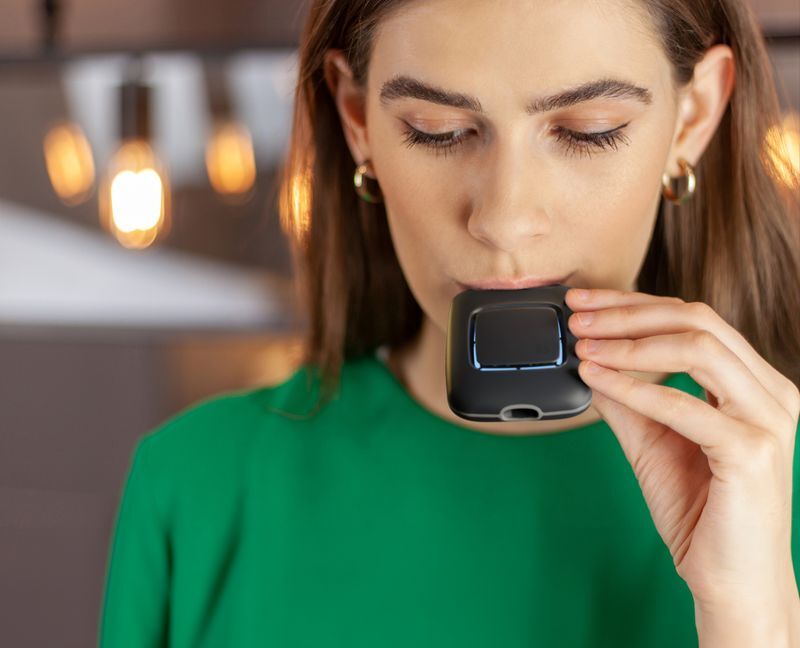
Identify which foods trigger your symptoms with our clinically validated digestive breath tester, designed for SIBO, IBS and food intolerances.
✔️ Unlimited testing: No more paying for single-use tests. Run as many breath tests as you like to track your hydrogen and methane levels over time.
✔️ Instant results: results appear on your phone in seconds – no waiting, no guesswork.
✔️ Track symptoms over time: Log your symptoms daily to see how they change over time. The more you track, the more insights you’ll get into your digestion.
Our 3-stage program, guides you step by step to better understand your gut and feel your best.
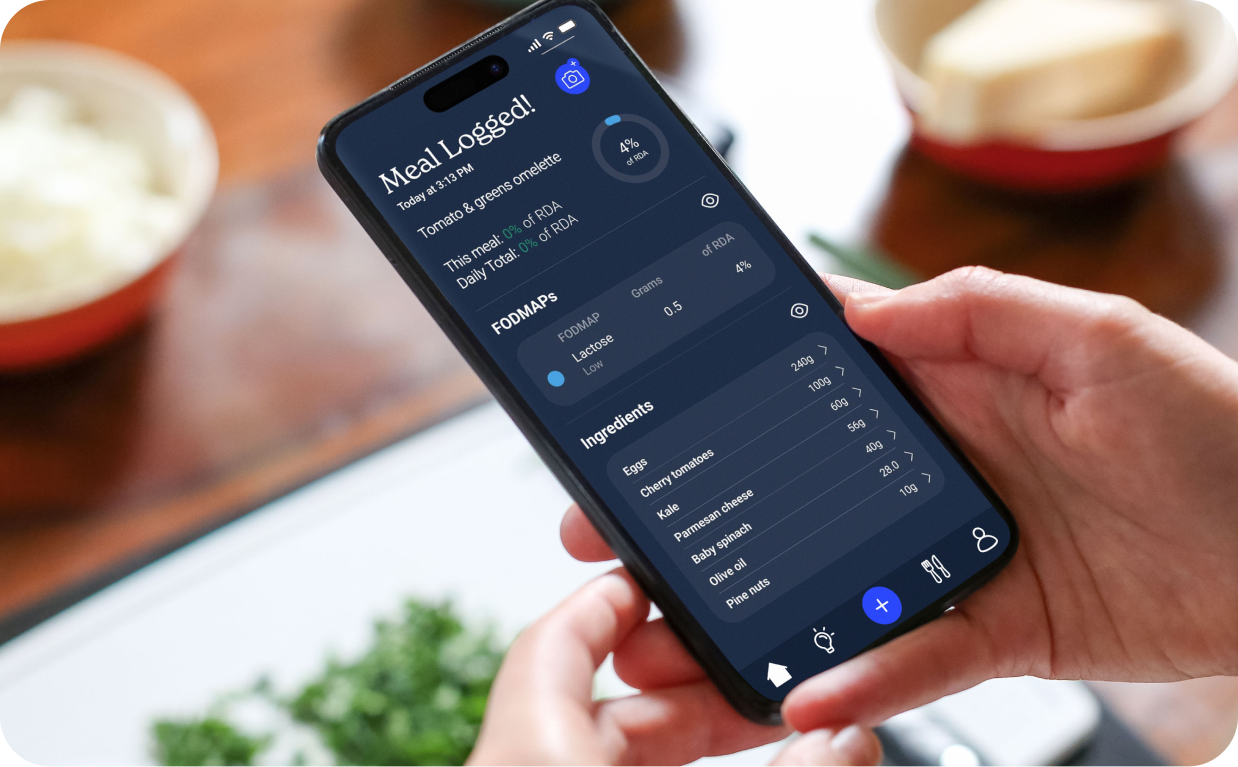
Enjoy your meal, then log it in the app with a tap. With our food library, you can see the FODMAP content of everything you eat and learn how it may affect your digestion.
The more you test, the more insight you’ll get. Take hydrogen and methane breath tests after every meal – and learn what works best for your digestive system.
Track your symptoms, review your results, and get personalized guidance on which FODMAPs and foods suit you best – and how much of them you can tolerate.
This is what you get: a clear picture of your unique digestive profile.
Not just a snapshot – the full picture.
See how your body responds to food, day after day. With that insight, you can make confident choices, feel more in control, and understand what your gut truly needs.
Our devices have been in multiple clinical trials in some of the most notable institutions in the world and our research has won awards at the top gastroenterology conferences.
The Food Intolerance Kit helps you identify your body’s response to key FODMAPs:
Fructose, Lactose, Inulin, and Sorbitol.
With these simple at-home breath tests using the app, we guide you step-by-step to identify intolerances and find relief from digestive symptoms.
We have microbes living in every part of our body. This is totally normal and healthy. As we move through the digestive tract, the number of microbes at each site increases. We have the most microbes in our large intestine. However, sometimes excess microbes can end up in our small intestine. When this happens, a condition called small intestinal bacterial overgrowth (SIBO) can occur. Those with SIBO often have symptoms of abdominal pain, bloating, nausea, belching, diarrhea and constipation. Some people with SIBO may produce more hydrogen, while others may produce more methane. It is important to speak with your doctor if you suspect you have SIBO. If you’ve received a diagnosis of SIBO from a doctor, this device could be helpful for tracking the levels of fermentation in your small intestine.
Visceral hypersensitivity (sensitivity to distension of the GI tract) and altered motility (constipation or diarrhea) are characteristics of IBS. About 40% of those with IBS tend to have more diarrhea. About one third of those with IBS are generally more constipated. The remainder switch between constipation and diarrhea. Those with IBS-C tend to have more methane producing microbes than those with IBS-D. Measuring both gases can help you gain clarity around your symptoms, in particular constipation.
Yes, it’s possible for us to share your results securely with your doctor, as long as we get your consent. Assuming your doctor is comfortable to proceed, just send an email to clinical@foodmarble.com with contact details for your doctor and we’ll take it from there.
By making breath testing a part of your day, you can discover a lot about your gut. If you manage to take between 8-10 breath tests each day, you are doing an excellent job. Here’s a good approach to daily breath testing:
– Take a baseline breath test once you wake up, after brushing your teeth and before eating food.
– Wait until one hour after your breakfast, then test hourly until your lunch.
– After lunch, wait an hour, then test hourly until your next meal and so on until you reach a maximum of 10 tests.

AIRE 2 measures both hydrogen and methane gases in your breath. These gases are produced during fermentation in the gut when certain foods aren’t fully digested. By measuring both, AIRE 2 provides more accurate, real-time insights into how your body responds to different foods, helping you better understand your digestive health.
It is important to speak with your doctor if you suspect you have SIBO. If you’ve received a diagnosis of SIBO from a doctor, this device could be helpful for tracking the levels of fermentation in your small intestine.