“Sure, lactose and sorbitol show up as triggers. But honestly? Almost anything can set me off. The real game-changer was getting actual data on quantity and timing.”
For somewhere between five and ten years, Yann had been navigating a daily relationship with his digestive system that he’d describe as “tense, at best.” Bloating was a constant companion, and the post-meal brain fog had become so routine that he’d just accepted productivity took a nosedive every afternoon.
Background
The bloating was the obvious problem. The brain fog was the sneakier one. As a software engineer, Yann’s job depends on being able to think clearly for hours at a time, and lunch had become a kind of cognitive coin flip. Some afternoons he’d be fine. Most afternoons, he’d be staring at his screen wondering why a function that made perfect sense at 9 AM now read like ancient Sumerian.
Like most people in his position, he tried a lot of things. Elimination diets, supplements, timed eating, the usual carousel of advice you find when you spend enough late nights reading forums. Some of it helped a little. None of it actually solved the problem. The frustrating part wasn’t the lack of options, it was the lack of certainty. Every change felt like a guess, and after months of guessing, he had a much smaller diet and roughly the same symptoms.
Finding FoodMarble
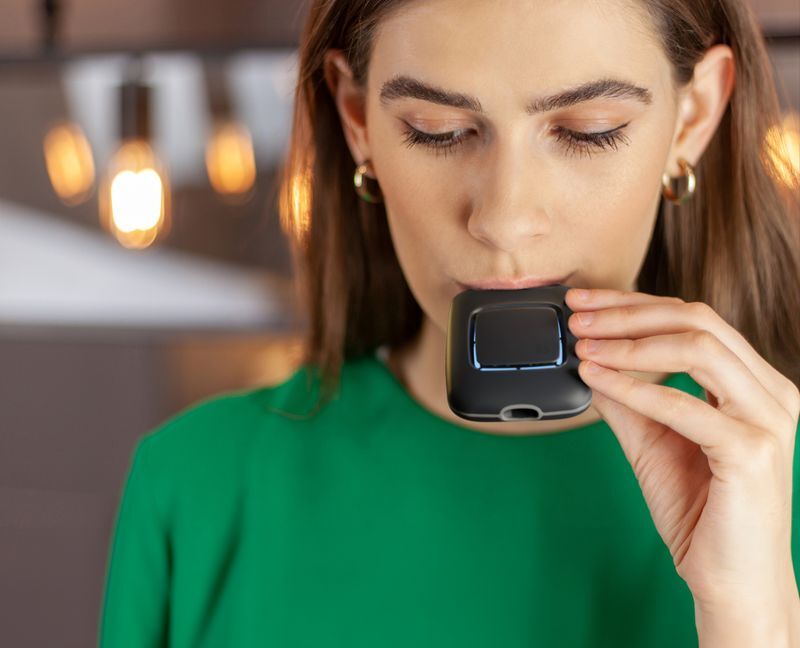
It was a nutritionist who finally pointed him toward FoodMarble. The pitch made immediate sense to him: instead of guessing what was wrong by removing things and waiting weeks, the AIRE 2 measures your hydrogen and methane levels after eating and tells you, with actual numbers, what your gut is reacting to.
For someone who debugs systems for a living, this was a much more familiar approach. You don’t fix a bug by deleting random code and hoping. You isolate the cause.
He ordered the AIRE 2 and the food intolerance test kits.
What he found
The straightforward answer was lactose and sorbitol. Both showed up clearly on the formal test kits. Sorbitol in particular was a plot twist, since it hides in chewing gum, sugar-free mints, and a surprising number of “healthy” snacks. Yann had been doing himself in with the very things he thought were helping.
But the more useful discovery was bigger and more uncomfortable: it wasn’t really about a clean list of bad foods.
“The truth is, almost any food can trigger me if the quantity is wrong, or the timing is wrong, or it’s stacked with the wrong other thing. There’s no neat list of villains. There’s just a system, and the system has limits.”
This is where the AIRE 2 stopped being a one-time test and started being a daily tool. By breath testing alongside meals over weeks and months, he could finally see the patterns: which foods reliably tipped him over the edge, which ones were fine in small amounts but disastrous in bigger ones, and which combinations were quietly conspiring against him. The app let him correlate symptoms back to specific meals and quantities, something no amount of journaling on his own had ever made clear.
“I’d tried a bazillion things and they all felt like guessing. The breath test gave me actual numbers. For the first time, I could draw a line between what I ate and how I felt afterward, with evidence. Once you have data on a problem, it stops being mysterious.”
Where things stand now
Within a few weeks, the difference was noticeable. The bloating eased off. More importantly, the afternoons started feeling like actual working hours again, and not a slow descent into cognitive porridge.
“The biggest thing for me is finishing a workday with brain power left. I didn’t realise how much energy my body was burning just trying to deal with food. Once I started managing portions and timing instead of just banning ingredients, I got a whole afternoon back.”
He’s also stopped pre-emptively cutting things out on suspicion. Most foods are back on the menu. He just knows now, with a precision he didn’t have before, which ones to be careful with, how much is too much, and what not to stack with what.
His advice to anyone in the same situation, particularly the engineering-minded who’ve spent months Googling their symptoms at 2 AM, is straightforward:
“Stop guessing. Get the data. You wouldn’t try to fix production by removing random services until something works, don’t do it to your gut either.”